

App.js Conf 2026 Recap: Gesture Handler 3.0, TypeGPU CLI, Screens 5.0, and More
App.js Conf is one of the most important React Native & Expo events, and attracts hundreds of developers every year. If you didn’t make it here this time, let us show you what you missed.
Gesture Handler 3.0
As they say, go big or go home – so we started the conference with a keynote talk. Krzysztof Magiera came with a question the whole room had an opinion on: where does React Native go from here?. The interesting part now is figuring that out.

Then, he announced two big things we’ve been working on lately.
The first was Gesture Handler 3.0 – and the headline is a hook-based API that finally matches how the rest of the React ecosystem thinks. Previously, the gesture lifecycle was tied to the component it was attached to. Now it's fully hook-driven: gestures managed in hooks, components just responsible for attaching them to the right views. Smaller change than it sounds, until you actually use it and realize how much mental overhead it removes.
A few things came along with it. You can now use SharedValues directly in gesture config, meaning gesture properties can change without triggering re-renders. The new Touchable component replaces the entire family of buttons the library used to ship: TouchableOpacity, RectButton, BorderlessButton, all of it. Press feedback and ripples run on the platform side now. No re-renders, no JS round-trips. Also, the legacy architecture support is gone.
Upgrading is straightforward – previous APIs are still there, so you can move screen by screen. The migration guide has everything you need.
Want to learn more about the new version of Gesture Handler? Read our blog post about it.
React Native Bottom Sheet
The second announcement from our keynote was a little bit quieter but just as useful. We shipped a bottom sheet library, built on Gesture Handler and Reanimated. Bottom sheets are one of those components that look simple until you're three hours into debugging why the scroll view conflicts with the swipe gesture. Building on top of our own primitives means those problems live at the right level.
Check it out on GitHub!
TypeGPU CLI
Shader programming still works the way JavaScript did before bundlers existed – that’s what Iwo Plaza started his talk with. Global state, string concatenation, constants injected from outside. It gets the job done until it doesn't, and then it really doesn't.
TypeGPU is the answer to that. Dead-code elimination, name collision avoidance, compile-time specialization, generics – all the things the JavaScript ecosystem takes for granted is now available for GPU code. Write your shaders once in TypeScript and use them wherever WebGPU runs: Three.js, React Native Skia, your own engine. Yes, the same code everywhere.
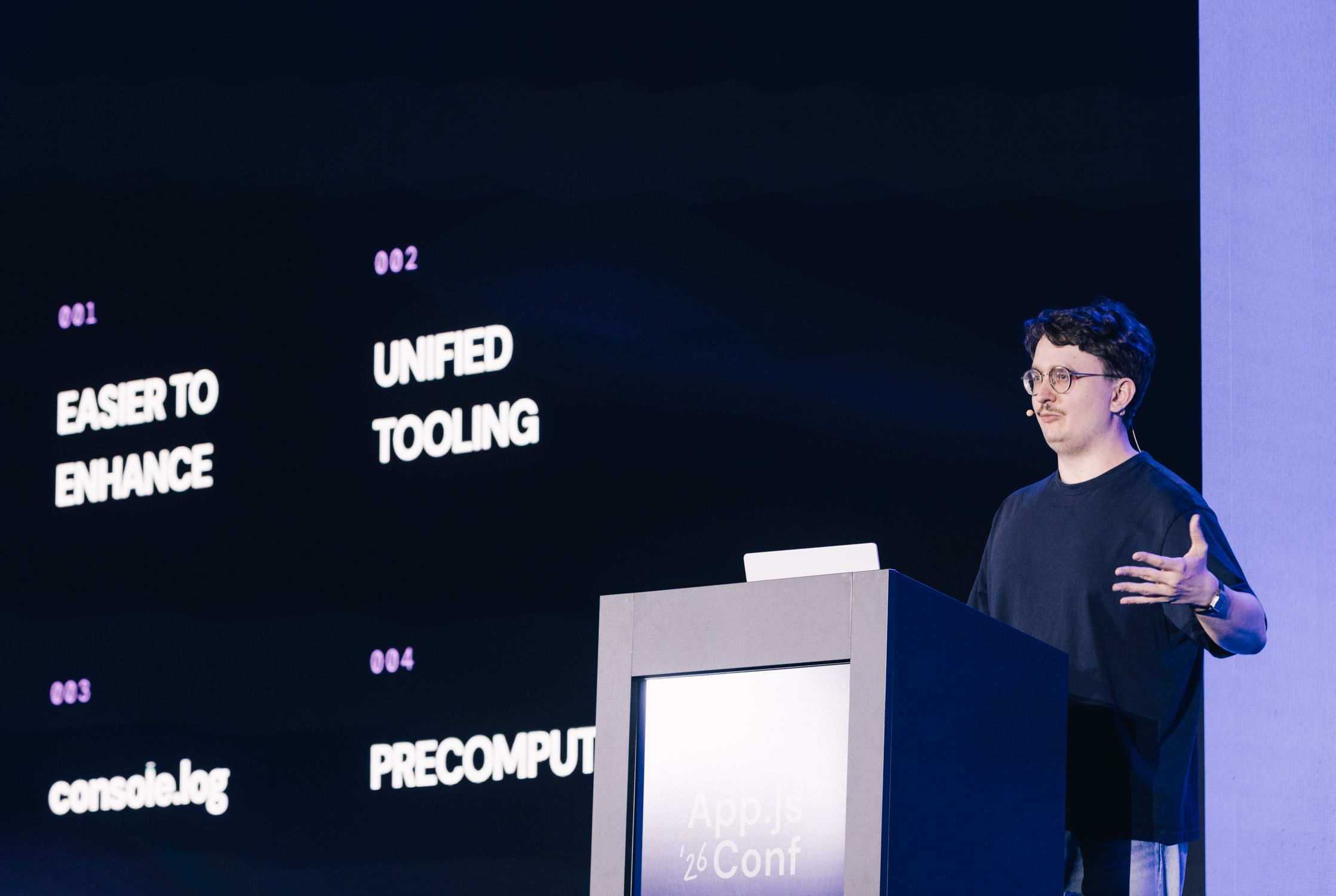
Then at the end of the talk, Iwo dropped the CLI. One command to configure everything – linter rules, 'use gpu' directive, operator overloading, agentic skills. The setup that used to take a while now takes only a minute. If you've been meaning to try TypeGPU, now's a good time.
Get started with our new guide.
On-Device AI in React Native
Norbert Klockiewicz has spent a year and a half building React Native Executorch and shipping real apps with on-device inference. He came to talk about what actually happens when you try on-device AI. App sizes that balloon unexpectedly, models that work fine on a flagship and crash on a mid-range device, batteries that drain during continuous inference…
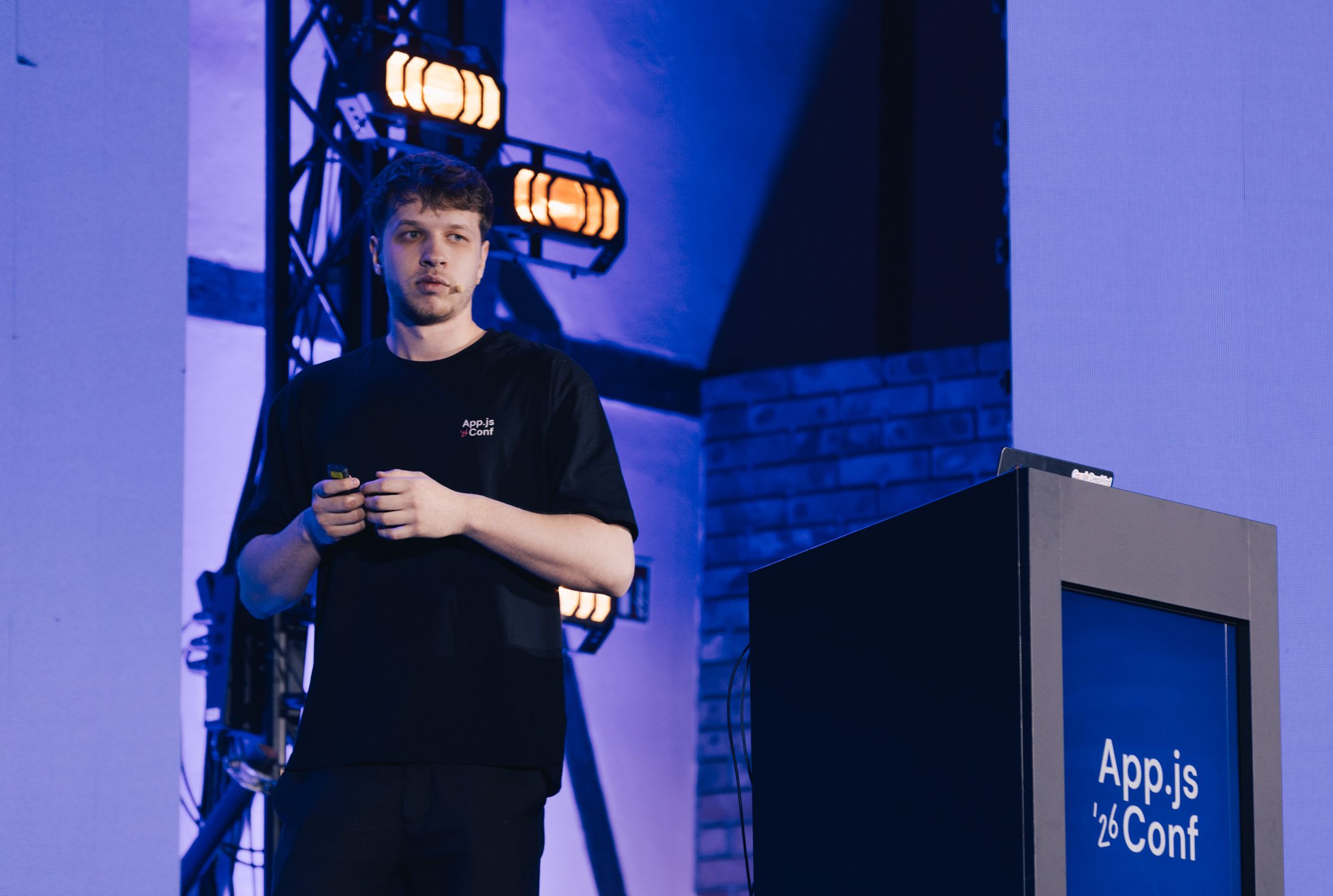
The talk split between two very different worlds: LLMs and computer vision. On-device chat and real-time object detection come with completely different constraints, and Norbert was honest about where things stand – which use cases are ready to ship today and which ones still need more time. Worth watching if you're planning anything in this space.
Screens & Routers
Navigation is one of those things that works until you want to understand how it actually works. Kacper Kafara from Software Mansion and Jakub Tkacz from Expo walked through what happens under the hood when a user switches screens – how React Native Screens and Expo Router work together to deliver native navigation through a simple API.
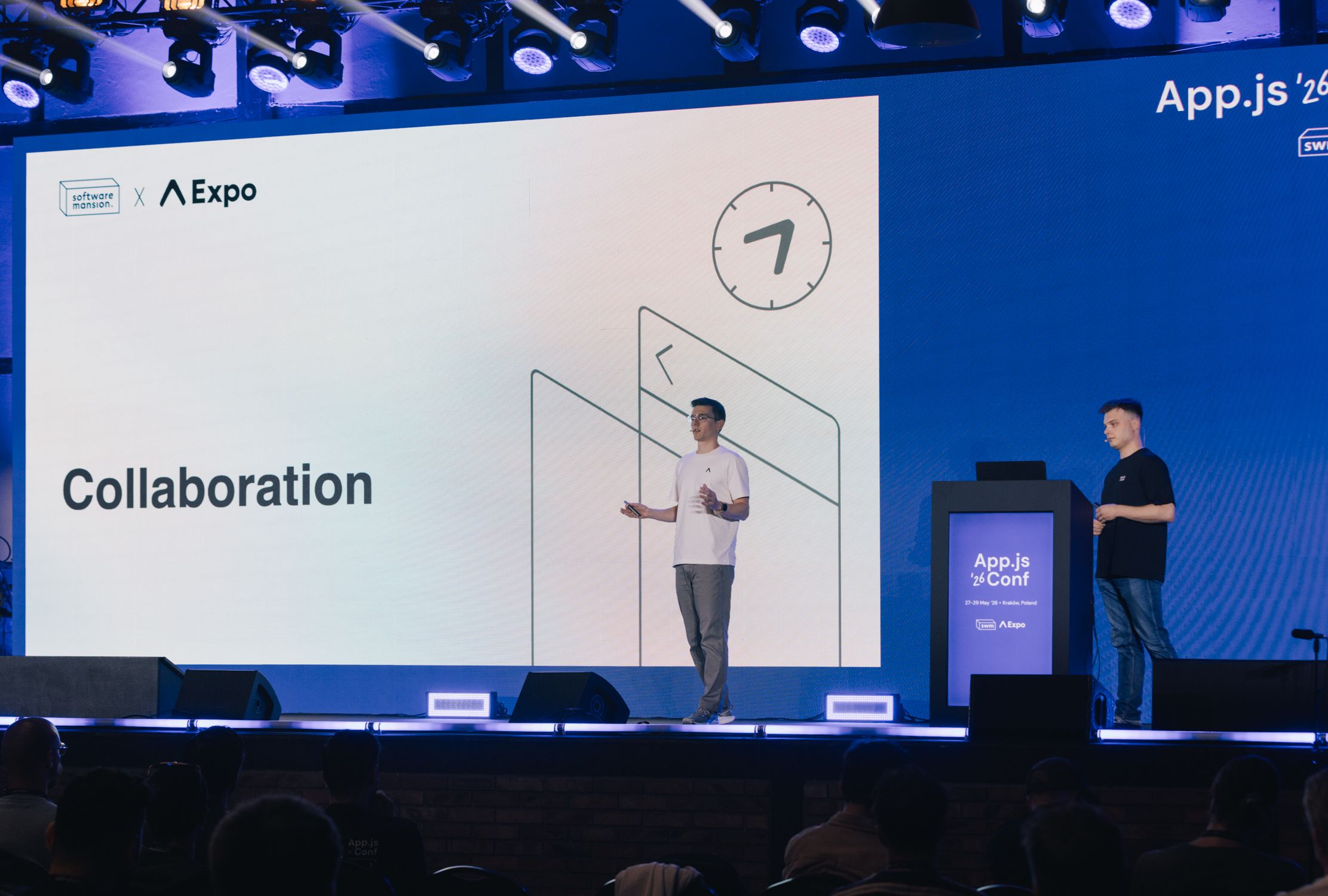
Also, they came with a surprise announcement: React Native Screens 5.0 is coming. The new major version will drop legacy architecture support and bring a fully reworked stack and tabs implementation. If you're building on the New Architecture, it's worth keeping an eye on.
And… our favourite part about App.js Conf
Three days of talks, workshops, and the kind of hallway conversations that don't get recorded anywhere. Running into someone whose library you've been using for two years and finally putting a face to the username, new faces showing up alongside the familiar ones, afterparties… It was so good this year. If you find yourself in the photo gallery, that's probably where the best things happened.
App.js is what becomes reality when the React Native community shows up in one place. The talks are great, of course, but that's not the whole point. The point, as cliché as it sounds, is the people – the ones you already know and the ones you meet for the first time. Big kudos to everyone who’s made it this year, and see you soon!